Album
Released By
Top Listeners
Trivia
This is a "let's get up and dance" song, taking place on ladies night at some favorite hangout. In the United States, ladies' nights were popular promotions at bars and nightclubs, offering free admission and other incentives for women to show up. Any money the establishments lost on their female customers were offset by the increase in male patrons. These days, there aren't many ladies' nights, as cultural norms have shifted.
Disco was dying when "Ladies Night" was released at the end of 1979, but that didn't stop Kool & the Gang from using a disco groove on this track and mentioning the "disco lady" and "disco lights" in the lyrics. The song mixed in enough of their funk flourishes to stand out from the pack and bring them into the '80s - it reached its chart peak of #8 in America the second week of 1980.
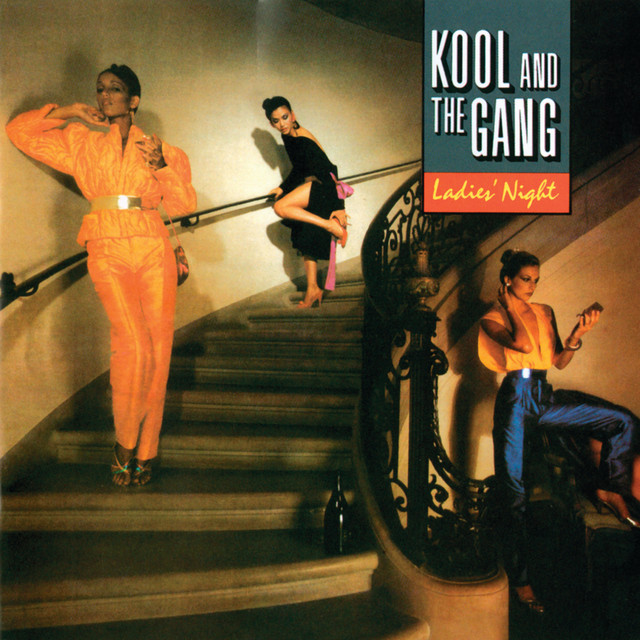
If commas save lives ("Let's eat grandma!" vs. "Let's eat, grandma!"), then what do apostrophes do? In the case of "Ladies Night," an apostrophe should be used after the 's' to show possession. It's a night belonging to the ladies, after all. According to sociologist Lisa Wade, omitting the apostrophe has some pretty hefty implications. She explained after a Canadian bar had a Ladies Night: "It is advertised as a night of ladies, not a night for ladies. To put it more bluntly, the ladies are not guests, they're bait." The original cover art for "Ladies Night" did include the apostrophe, but the press materials and chart listing did not (neither did the 1995 rerelease). But let's cut Kool & the Gang some slack as the song is clearly giving the night to the ladies, not inviting creepy interlopers: On disco lights your name will be seen You can fulfill all your dreams Party here, party there, everywhere This is your night, baby, you've got to be there
Audio Analysis
Spotify Stats & Music Discovery
Music data, artist images, album covers, and song previews are provided by Spotify. Spotify is a trademark of Spotify AB.